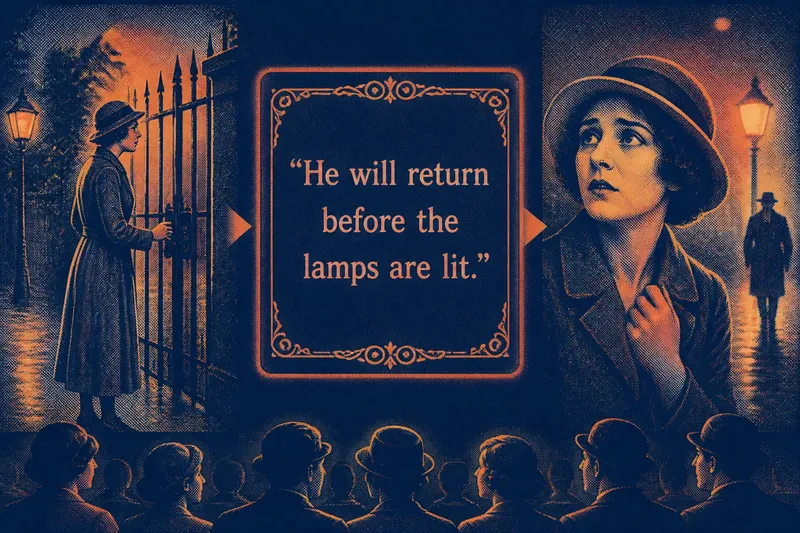
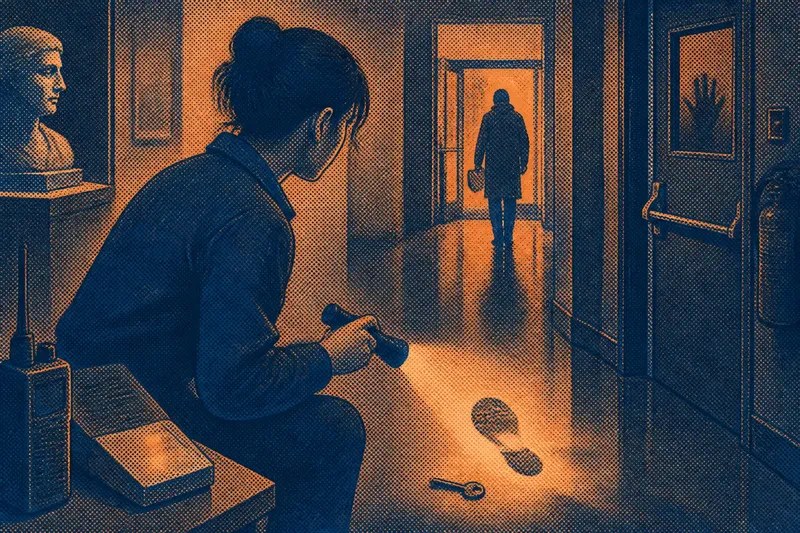
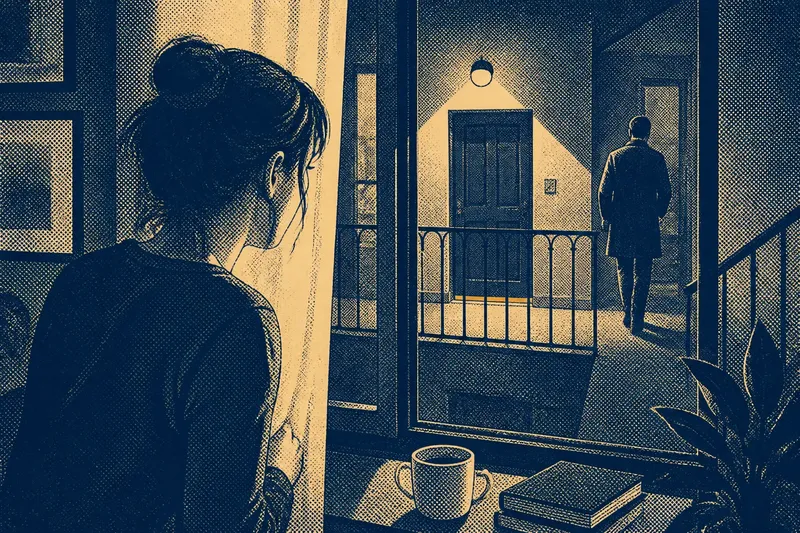
A Doorway in the Frame: Reading Entrances in a Scene
Read doorways in film scenes to see how framing separates spaces, directs attention and changes an entrance from routine movement into a shift in mood.
A doorway can make an entrance feel abrupt, hesitant or ordinary before the newcomer speaks. Reading doorways in film scenes means noticing how the frame shows the threshold, the spaces on either side and the people whose positions change when someone crosses.
Begin with framing
Choose a scene in which someone enters or leaves through a visible doorway. Watch it once without pausing, then return to the moment just before the person crosses. Notice whether the opening is centred, near the edge, partly blocked by furniture or framed within a larger room.
Start with what you can see: whether the door is open or shut, which parts of each room remain visible, and where the approaching person stands. Hold off on assigning a mood. Separating observation from interpretation makes it easier to explain what in the image led you to a particular response.
Look at the cut as well as the doorway. If the opening stays in roughly the same place across shots, the room may feel continuous. A changed angle can reveal more of the space, hide someone who was visible, or make the same threshold seem less easy to approach.
Map the spaces
A doorway can divide two rooms while allowing the camera to show both at once. One character might remain in a corridor as another waits inside; a second opening may reveal a further room behind the main action. Ask what each person can see and whether the threshold limits anyone’s access.
A doorway also creates a frame within the film frame. It can outline a character against a room, or make the space around them seem especially prominent. A row of openings can draw the eye deeper into the image, but its effect depends on the camera position, visible walls and the characters’ movement.
Do not assume that a doorway automatically means confinement or freedom. The opening’s width, what blocks it, and whether a character can cross without interruption all affect what the image communicates. A quick sketch or a sentence describing the positions is often enough to keep track.
Follow attention
Before the entrant moves, notice what catches your eye. Light, contrast, colour and movement can make the doorway prominent, but another detail may compete with it. A bright window across the room, for instance, can draw attention away from a dark entrance.
Watch the crossing again. Does the movement lead your eye towards the opening, through it or elsewhere? Someone who pauses in a doorway can hold attention there, while a person entering at the edge may redirect it across the room.
The camera’s distance changes what information is available. A wider view may show the entrant and the people inside together; a closer view may focus on a face, hand or shoulder while leaving the room’s layout unclear. Neither choice has a fixed meaning: each guides attention differently.
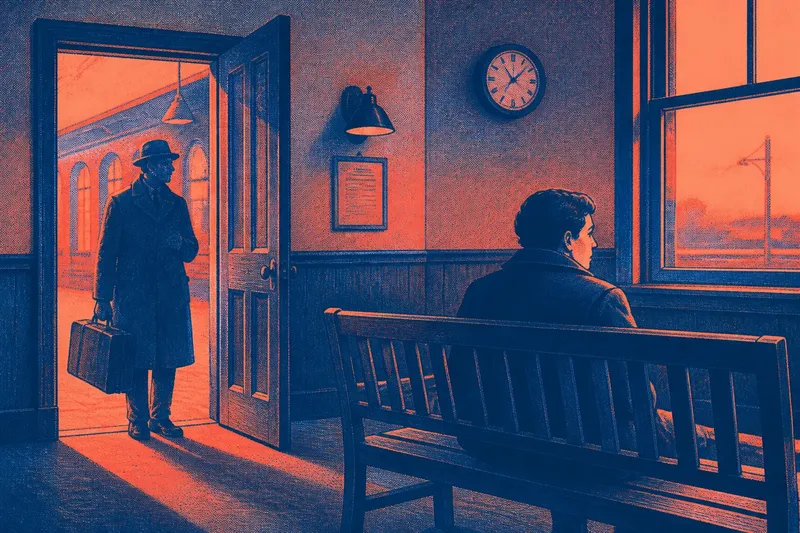
Say you are watching an invented scene in a quiet railway waiting room. A traveller appears at a door on the far left while a seated passenger looks towards a window. If the frame keeps both visible and the traveller waits on the threshold, you can observe their separation before either explains it; the pause may make the arrival feel hesitant.
Compare entrances
Compare two entrances from the same film, or two moments in one scene. Look for a visible difference and then consider its likely effect. An entrant shown approaching in an uninterrupted shot gives the viewer time to anticipate the crossing; a person who appears inside after a cut may seem to arrive more suddenly.
Notice what the door itself does. It may swing open and reveal a new part of the room, briefly cover the entrant, or close behind them and remove the corridor from view. A door that remains still leaves the opening unchanged while the person’s position shifts.
Keep the observation distinct from the interpretation. “The second person is already in the room when the shot begins” describes what is visible. “That makes the arrival feel sudden” explains a possible effect. The first statement gives the second a clear basis.
Read returning thresholds
If the same doorway appears again, compare who occupies it and what the frame reveals beyond it. Someone who once waited outside may later enter without hesitation; another person may stand in the opening and block the view into the room. The arrangement can change a relationship without changing the location.
Look for changes in what lies beyond the door. An earlier shot may have shown a welcoming room, while a later one crops it away or leaves it empty. The present composition can prompt a memory of the earlier view, even when it provides less information now.
Describe the change before calling it a symbol. “The returning character now stands inside while the other remains in the corridor” is more useful than saying the door represents power. The visible positions give you a sounder basis for considering power, vulnerability or distance.
How should you pause?
What should you notice first?
Start with the doorway’s position, the visible space on either side and the entrant’s location. These details give you an observable account before you decide what mood the composition suggests.
Does a doorway always signal separation?
No. It can divide rooms, connect them or show both as one continuous setting, depending on the camera angle and what remains visible. Notice whether the characters can see one another and how easily the entrant crosses.
What if the entrance happens off-screen?
Notice when the character first becomes visible and what the preceding shot led you to expect. An arrival revealed after a cut may feel abrupt, but the framing and other characters’ reactions affect that impression.
Is pausing every shot useful?
Usually not. Pause at the frame before the crossing, at the crossing and after the entrant settles. Those moments allow comparison without breaking the scene’s rhythm into too many fragments.
Build a viewing note
On the first viewing, choose one entrance and watch it without stopping. On the second, pause just before the crossing and record the doorway’s location, whether it is open, and what you can see on either side. On the third, watch the crossing and note where the entrant and other characters move.
On the fourth viewing, track what draws your attention before and during the entrance. On the fifth, compare another entrance from the same scene or film, if one is available; otherwise, revisit the original and note what the door and frame reveal after the crossing. On the sixth, write a short account linking the visible arrangement to a cautious interpretation, such as: “The pause makes the arrival feel uncertain because the character remains framed by the corridor.”
On the seventh day, revisit the scene without pausing. Check whether the details in your note remain legible at normal speed. If an interpretation depends on something you can barely see in the uninterrupted scene, keep it as a minor observation rather than making it the centre of your reading.
Counting every doorway or assigning fixed meanings to their shapes is not worth the effort: a narrow opening is not automatically threatening, and a wide one is not automatically welcoming. Reading doorways in film scenes becomes more precise when you follow what the camera reveals, when it reveals it and how the entrant changes the arrangement of people and spaces in the frame.