Why Silent Films Used Intertitles to Shape Story and Rhythm
Why silent films used intertitles: see how dialogue, context and timing make story details clear while guiding attention to performance and emphasis.
Silent-film intertitles did more than replace speech: they supplied needed information while controlling when viewers paused to read and what they noticed next. A card could carry a character’s words, clarify a change of place or time, or give a scene’s next image a particular emotional weight.
To understand an intertitle, compare its wording with the images immediately before and after it. Ask what the card contributes, what the actors already communicate, and why the film places the text at that moment. This makes it easier to distinguish straightforward explanation from a deliberate dramatic pause.
Dialogue cards
When a character’s exact words matter, an intertitle can carry dialogue between shots. The film shows the speaker, cuts to the words, then returns to a face or gesture. Reading becomes part of the performance: the actor’s expression gives the printed line a tone of its own.
A card can also make clear who is speaking, especially when several characters are present or a speaker is outside the frame. Watch how the image before and after the card shapes the line rather than treating text as a substitute for acting.
Dialogue cards are useful when a story turns on a promise, accusation, instruction or misunderstanding. A glance may suggest unease, but a sentence can establish precisely what one character has committed to do. The text narrows interpretation where uncertainty might make the next action difficult to follow.
Context cards
Some intertitles explain information that an image cannot easily establish alone: a change of place, a passage of time, a relationship or a piece of background. A card might identify two characters as relatives or tell viewers that an arrival follows a journey. The next shot can then focus on behaviour instead of spelling out every fact visually.
Context cards are especially useful when a story shifts between settings or relies on circumstances that viewers could not confidently infer. A character entering with a wet coat may suggest rain; it cannot reliably explain where they have come from or why the journey matters. Text can settle the relevant point without a separate explanatory scene.
If a card repeats what the images already show, check whether it adds a new shade of meaning. Its wording might reveal a character’s attitude or direct attention to a detail that matters later. If it adds nothing, it may simply reflect the film’s storytelling conventions rather than signal a clue you have missed.
Reading by situation
Different viewing situations call for different kinds of attention. These checks connect a specific observation to a useful next decision, without assuming every intertitle has the same purpose.
- If the plot feels unclear: Check for names, relationships, locations and time shifts in context cards. If one supplies a missing fact, connect it to the following action; if none does, use the scene’s visible changes to track what has shifted.
- If a scene’s tone is hard to read: Compare the dialogue card with the actor’s expression and posture. If they agree, take the line at face value; if they conflict, consider whether the performance makes it teasing, doubtful or threatening.
- If the film seems to pause: Check whether the card comes before a revelation, choice or emotional response. If it prepares one, let the pause build expectation; if not, treat the interruption as a practical break for reading.
- If the wording feels repetitive: Check whether it directs attention to a detail or viewpoint the image leaves open. If it does, follow that emphasis; if it does not, read it as clarification rather than searching for a hidden symbol.
- If a name is unfamiliar: Check who appears before and after the card and whether the text identifies a speaker or relationship. If the next action clarifies the connection, follow that; if it remains unclear, keep the name provisional rather than guessing.
- If the card changes the scene’s mood: Check whether the next image confirms or complicates its wording. If it confirms the line, note how it frames the action; if it resists the line, give the performance and editing equal weight.
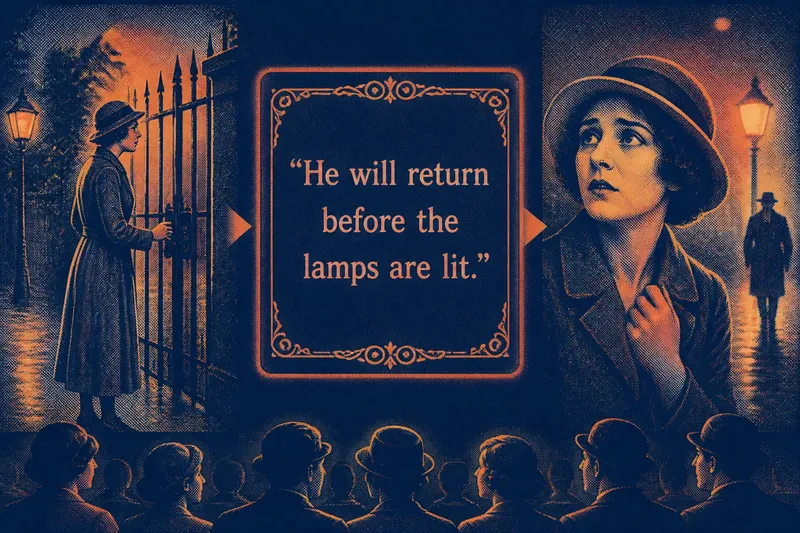
Say you are watching a scene in which a woman stands beside a locked gate, then an intertitle reads, “He will return before the lamps are lit.” The starting information is a waiting character, a locked gate and a promised return by a stated time. Read the line as a promise, then watch the next image for her expression: if she appears hopeful, the wait feels expectant; if she looks wary, the same promise can feel ominous. The card gives the following image a question to hold rather than merely naming an event.
Timing and emphasis
An intertitle interrupts the flow of images, but interruption is not automatically a flaw. The cut to text changes the viewer’s task from watching movement to reading, then asks the eye to return to the screen. A filmmaker can use that shift to slow a moment, sharpen a line or separate one phase of an action from another.
Placement matters. A card shown before a character acts can create expectation; the same words shown afterwards can sound like an explanation or judgement. A pause before the next image may let the sentence linger, while a quick return to the actor can make it feel like an immediate response.
Some cards are brief and functional; others receive emphasis through wording, composition or ornamental design. A short sentence isolated on a plain card may feel more forceful than a longer passage surrounded by decorative lettering. Treat these differences as clues to emphasis, not as proof of a hidden meaning.
It is not worth assigning symbolic meaning to every pause or flourish. Start with the plain function of the words and the neighbouring images, and read further significance into the timing only when the scene’s structure gives you a reason.
Intertitle questions?
How can you tell dialogue from explanation?
Dialogue cards usually present a character’s spoken words, often in a voice belonging to someone already shown. Explanatory cards tend to describe circumstances or transitions rather than speech, though a film’s style can blur the distinction.
Why does a card appear before the action?
A card before an action can prepare you to anticipate a choice or consequence. It may also establish a condition, such as a deadline or promise, that makes the next gesture meaningful.
Should you read every intertitle as a clue?
No: many cards provide ordinary dialogue or context, making the story easier to follow. Treat a card as especially significant when its wording, placement or relation to the image gives it unusual emphasis.
What if a card is difficult to follow?
Use the surrounding scene: identify who is present, what has just happened and what changes after the card. If a word or name remains unclear, the subsequent action may still make the relevant relationship understandable.
Text and performance
Intertitles never operate in isolation from the visual track. A line that sounds affectionate on the page might accompany a rigid posture and an averted gaze. A blunt sentence can become comic when paired with a character’s exaggerated confidence; the image supplies a performance that print cannot contain.
Editing also affects how a card is understood. A line followed by a listener’s reaction invites you to judge its effect; a line followed by the speaker’s next gesture keeps attention on intention. If the film returns to the same character, notice whether the face confirms the words, complicates them or quietly contradicts them.
On a first viewing, read the card once and then look back to the screen. The return image may carry the essential emotional information. On a later viewing, compare the text with the performances around it and consider how much meaning depends on their combination.
Cards as storytelling choices
Intertitles gave filmmakers a flexible way to balance what viewers could see with what they needed to know. A film could keep a character’s private thought out of the image, clarify a change of circumstance or let a line of speech set up a reaction. Each choice shaped the division of labour between words, acting and editing.
That division is why intertitles are more than captions added to a silent picture. They determine when viewers read, when they watch and which information receives emphasis. When you encounter one, ask what would be lost if it were removed, then check whether the following image answers, deepens or resists what it says. This comparison makes the card’s purpose—and the film’s control of attention—easier to see.