A Double Feature That Shares a Place, Not a Plot
Plan a double feature with films set in the same place, then compare atmosphere and viewpoint for sharper questions and a more memorable discussion.
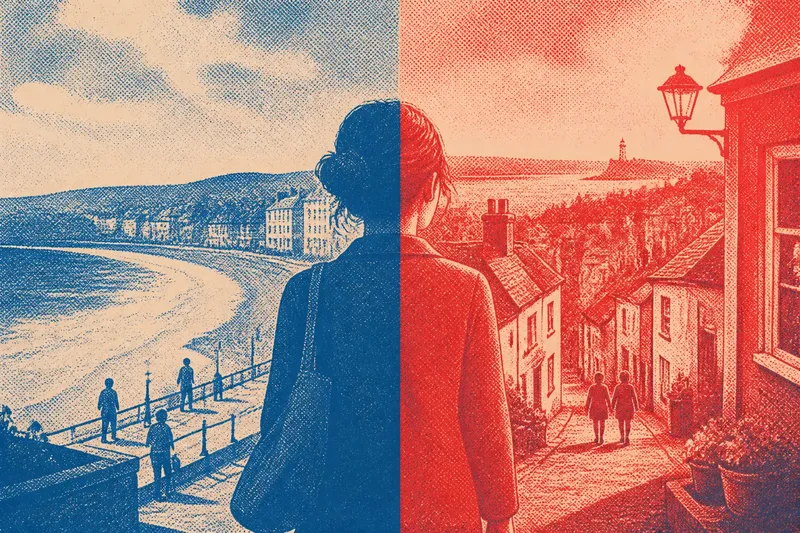
A double feature with films set in the same place can show how differently a location shapes what viewers notice. Choose two films that share a kind of setting—a hotel, a small town, a ship or a city street—but tell unrelated stories. Their useful connection is the place each film asks you to inhabit, not a matching plot.
Choose a shared place
Begin with a setting broad enough to fit distinct films but precise enough to invite comparison. “A city” may be too loose; “a city seen through its night streets” gives you a clearer thread. Two hotel films, for instance, can differ in era and genre while sharing corridors, lobbies and rooms temporarily occupied by strangers.
Look for settings that shape what characters can see, hear or do. A ship confines people within a moving boundary; a station fills with arrivals and departures; a seaside town can feel open at the water’s edge yet socially close-knit. These qualities give your discussion something concrete to return to.
The places need not be identical. One film might centre on a grand hotel and another on a roadside motel. The contrast works if both make lodging, privacy or passing through part of their worlds. If the connection needs a long explanation, choose a clearer pair.
Compare the atmosphere
Atmosphere is the feeling a film builds through images and sounds, rather than a plot event you can recount. Notice light, colour, room tone, music and pace. Does the place seem restful, watchful, crowded or empty? Name the detail that gave you that impression.
Pay attention to how much of the location the film reveals. One story may linger in a bright lobby where people cross paths, while another returns to narrow back corridors. The first can make the setting feel public; the second may turn it into a maze of private thresholds.
Sound offers a useful point of comparison. Listen for traffic beyond a window, footsteps on a hard floor, wind across an open space or the hush after conversation stops. A place can feel exposed indoors or intimate despite a crowd; the soundtrack may guide that judgement before dialogue does.
Notice the viewpoint
Ask whose experience makes the setting legible. A visitor may notice maps, signs and unfamiliar customs; a resident may move through the same streets without explanation. A worker might know service entrances and routines while remaining absent from the spaces guests admire.
That viewpoint affects which parts of a place become important. A hotel guest may treat a room as a refuge, while an employee sees its repeated turnover. An outsider may read a quiet town street as picturesque, while a resident recognises the limits of daily life. These are possibilities, not automatic meanings: look at the film’s framing, attention and dialogue before drawing a conclusion.
Consider the camera’s position, too. Does it observe a crowd from a distance, follow one person through it, or stay still as people enter and leave the frame? The setting can seem welcoming or indifferent partly because of how closely the film lets you approach its inhabitants.
Keep the pairing distinct
Choose films with enough difference to make comparison worthwhile. If both use similar lighting, pacing and character roles, the shared location may offer little beyond confirmation. A comedy beside a drama, or a quiet film beside a crowded one, can reveal different possibilities without requiring a shared storyline.
Do not force every detail into a symbolic reading. A red sign may simply help someone find the exit; a long corridor may be there because the building has one. Start with what appears and sounds on screen, then ask whether the film gives that detail repeated or unusual emphasis. If not, let it remain ordinary.
It is not worth spending the evening searching for a perfect match in production design or exact geography. The aim is to notice what two films do with a comparable kind of place, not to prove their locations interchangeable. A loose but clear connection leaves more room for attentive viewing.
Questions about place
What makes a setting feel welcoming?
Notice who can enter, where people are shown waiting, and whether the film gives them a place to settle. Warm light may suggest comfort, but access and attention can complicate that impression.
How does the film show the place changing?
Look for shifts in weather, noise, crowding or time of day. A location can feel transformed by who occupies it, even when the camera returns to the same corner.
Whose presence is easy to overlook?
Check who appears briefly, remains at the edge of the frame or is referred to without being seen. Their absence may matter, but distinguish a visible pattern from a guess about the filmmaker’s intent.
Would the story feel different elsewhere?
Ask which actions depend on this kind of place: waiting, hiding, passing through or living among people who know one another. If very little depends on it, the setting may create atmosphere rather than pressure the story.
A simple viewing rhythm
Before the first film, write down one question about the shared place, such as “Who gets privacy here?” After each film, note one visual detail, one sound and one viewpoint that shaped your answer. Brief notes preserve an impression without turning the screening into a hunt for evidence.
Say you choose two films set in seaside towns: one follows a visitor, the other centres on a local family. You notice that the visitor’s film repeatedly frames the shore as open space, while the family’s film spends more time in kitchens and on familiar streets. The contrast gives you a discussion about who experiences the town as escape and who experiences it as home, without requiring the plots to overlap.
Leave a little space between screenings if you can, but avoid explaining the first film to everyone before the second begins. Each viewer may carry a different detail forward—a sound, a doorway or a view across an empty street. Comparing those observations afterwards can reveal not only the setting, but the position from which each film looks at it.